Sponsor






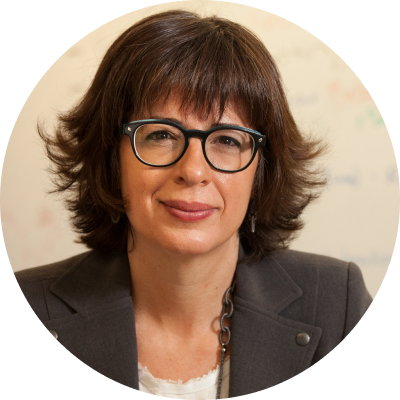
Abstract: This presentation explores the powerful role of mathematical optimization and algorithmic and metaheuristic tools in transforming social and healthcare services. The use of optimization techniques can lead to significant cost savings, improved utilization of resources, higher satisfaction among personnel and service users, and—most importantly—ensure that limited resources are directed to those who need them most. Ultimately, this fosters a more equitable and sustainable society.
The talk will showcase real-world implementations developed in partnership with organizations like the Barcelona City Council, Suara, and Banc del Moviment.
Key applications discussed will include:

Abstract:
Despite emerging concurrently with exact methods, metaheuristics research has never found a comparable theoretical foundation. This absence has resulted in a "horse race" mentality, where algorithmic performance is prioritized over the generation of robust scientific knowledge. Consequently, while the field has produced highly effective optimization tools for large-scale applications, it suffers from a scarcity of verifiable scientific insights.
We contend that the advancement of metaheuristics research requires a transition toward a rigorous empirical paradigm. Our recent meta-analysis of adaptive large neighborhood search (ALNS) indicates that many established "truths," such as the purported benefits of adaptiveness, rely only on anecdotal evidence and demonstrate significantly less impact than traditionally assumed.
To establish metaheuristics as a mature scientific discipline, the community must adopt standardized experimental protocols to ensure comparability, open data repositories to facilitate transparency, and modular algorithmic components to isolate specific mechanisms. Ultimately, the field must undergo a cultural shift, prioritizing the search for robust and reproducible scientific understanding over incremental performance gains.
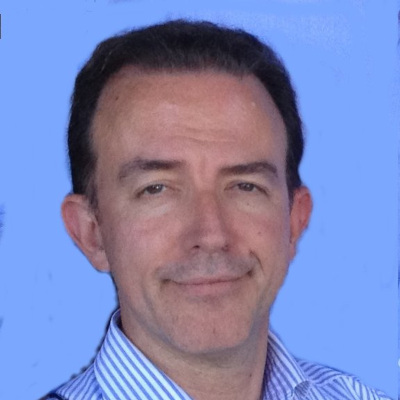
Abstract: Artificial Intelligence is booming, and the wild transformative power of the current technoscience lies in the strong coupling between Optimization and Machine Learning.
Optimization drives Machine Learning, and Machine Learning improves Optimization by exploiting data produced while searching for better and better solutions, a spiral of continuously improving AI. Currently, this happens mostly by manually improving one with the help of the other, with a long-term vision of more and more self-improvement through automated (data-driven) creativity and innovation with human goals and control.
In this tutorial I will mostly explain the main methods to use ML for Optimization (ML4Opt), both online and offline, from the past history to the future challenges.
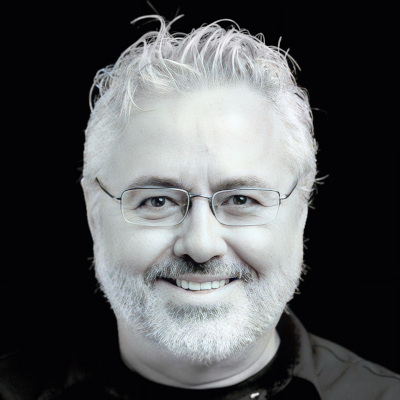
Abstract: This tutorial presents the Random-Key Optimizer (RKO), a flexible metaheuristic framework that represents solutions as vectors in a continuous random-key space and maps them to feasible solutions through problem-specific decoders. We describe the fundamental components of RKO, including encoding and decoding schemes, elite solution pools, hybridization of multiple metaheuristics, and parallel search with solution sharing. Emphasis is placed on the separation between problem-independent search and problem-dependent decoding, enabling reusable optimization engines across diverse applications. We also discuss recent extensions of RKO to mixed-integer programming models, where carefully designed decoders naturally enforce integrality, variable bounds, and complex constraints, with illustrative applications to portfolio optimization and time-dependent routing problems.
In addition, the tutorial introduces emerging research on automating decoder design using large language models (LLMs). This approach employs an iterative cycle of code generation, compilation, validation, and refinement, significantly reducing the expertise required to develop high-quality decoders while maintaining strong solution performance. The session combines theoretical insights, computational results, and implementation guidance, providing participants with practical tools for applying RKO to large-scale, highly constrained optimization problems across domains.
The Metaheuristics International Conference (MIC) series was established in 1995 and this is its 16th edition! MIC focuses on the progress of the area of Metaheuristics and their applications and provides an opportunity to the international research community to discuss recent research results, to develop new ideas and collaborations, and to meet old friends and make new ones in relaxed atmosphere. MIC 2026 strives to propose a high-quality program that will be completed by a number of invited talks, tutorials, workshops and special sessions.
MIC 2026 solicits contributions dealing with any aspect of metaheuristics. Typical, but not exclusive, topics of interest are:
MIC 2026 accepts submissions in three different formats:
All submitted papers will undergo a review process. All papers must be prepared using Lecture Notes in Computer Science (LNCS) template (available here), and must be submitted in PDF using the easychair system at this link.
Please note that each participant may give only one oral presentation. However, participants may be co-authors of multiple contributions, provided that different co-authors present them. Moreover, to include the paper in the proceedings, at least one author of each contribution must register for the conference.
Accepted papers in categories 1 and 2 will be published as post-proceedings in Lecture Notes in Computer Science series by Springer.
Accepted contributions of category 3 will be considered for oral presentations at the conference, and will not be included into the LNCS proceedings. An electronic book instead will be prepared by the MIC 2026 organizing committee, and made available on the website.
In addition, a post-conference special issue in Journal of Heuristics will be considered for the significantly extended and revised versions of selected accepted papers from categories 1 and 2.
All deadlines are Anywhere on Earth (AoE = UTC-12h).
| Conference fees | ||
|---|---|---|
| Early | Late | |
| Regular | 550 € | 650 € |
| Student | 450 € | 550 € |
| Accompanying person | 250 € | |
Fees include: Participation to all sessions; Conference materials; Lunches; Welcome cocktail; Coffee breaks; Social events and Gala dinner.
Accompanying person fee includes: Lunches; Welcome cocktail; Coffee breaks; Social events and Gala dinner.
To register you can use the registration form.
Ischia is one of the wonderful islands in the Gulf of Naples, having volcanic origin and known and appreciated all around the world for its diversified landscape, natural beauty, and thermal water.
Its wonderful thermal hot springs have been used for wellness and therapeutic treatments since the VII century b.C. On Ischia, there are many nice beaches that invite the visitor to take a swim.
A brief guide in English and Italian is available, including useful information, practical tips, and restaurant suggestions.
Hotel Continental Terme has an architecture expressed in the Mediterranean style buildings surrounded by the lush greenery of a park.
To make a reservation fill out this form and send it to Hotel Continental Terme (more info can be found at here).
Fill out this form and send it to the Hotel Continental Terme to reserve a transfer organized by the Hotel

The Conference Centre counts 12 comfortable modular meeting rooms hosting from 15 to 300 seats.
It offers to participants the opportunity to combine work with a short holiday of sun, sea and wellness with the added value that only an enchanting place like Ischia can give.
Paola Festa (University of Naples "Federico II", Italy)
Fred Glover (Entanglement Inc., USA)
Belén Melián-Batista (Universidad de La Laguna, Spain)
Celso Ribeiro (Universidade Federal Fluminense, Brazil)
Éric Taillard (University of Applied Sciences of Western Switzerland)
Stefan Voss (University of Hamburg, Germany)
Carmine Cerrone (University of Genova, Italy)
Ciriaco D'Ambrosio (University of Salerno, Italy)
Daniele Ferone (University of Naples "Federico II", Italy)
Paola Festa (Chair) (University of Naples "Federico II", Italy)
Giusy Macrina (University of Calabria, Italy)
Tommaso Pastore (University of Naples "Federico II", Italy)
Ornella Pisacane (Marche Polytechnic University, Italy)
Ana Viana (INESC TEC/ISEP, Portugal)
Anand Subramanian (Universidade Federal da Paraíba, Brazil)
Andrea Schaerf (University of Udine, Italy)
Andreas Fink (Helmut-Schmidt-University Hamburg, Germany)
Andrew Parkers (Universidad of Nottingham, United Kingdom)
Angel Juan (University Politècnica de València, Spain)
Antonio Mauttone (Universidad de la República, Uruguay)
Bruce Golden (University of Maryland, USA)
Carmine Cerrone (University of Genova, Italy)
Celso Ribeiro (Universidade Federal Fluminense, Brazil)
Cesar Rego (University of Mississippi, USA)
Christian Blum (Spanish National Research Council, Spain)
Ciriaco D'Ambrosio (University of Salerno, Italy)
Claudia Archetti (University of Brescia, Italy)
Colin G. Johnson (University of Nottingham, United Kingdom)
Daniele Ferone (University of Naples "Federico II", Italy)
Daniele Vigo (University of Bologia, Italy)
David Alvarez Martinez (Los Andes University, Colombia)
Dmitri Kvasov (DIMES, University of Calabria, Italy)
El-Ghazali Talbi (University of Lille, France)
Ender Ozcan (University of Nottingham, United Kingdom)
Erwin Pesch (University of Siegen, Germany)
Francesca Guerriero (University of Calabria, Italy)
Frédéric Gardi (Hexaly, USA)
Gary Kochenberger (Entanglement Inc., USA)
Giusy Macrina (University of Calabria, Italy)
Günther Raidl (TU Wien, Austria)
Ivana Ljubic (ESSEC Business School, France)
Javier Faulin (Universidad Pública de Navarra, Spain)
Jin-Kao Hao (University of Angers, France)
José Fernando Oliveira (INESC TEC, University of Porto)
José Andrés Moreno Pérez (Universidad de La Laguna, Spain)
Jose-Luis Gonzalez-Velarde (Tecnologico de Monterrey, Mexico)
Karl Doerner (University of Vienna, Vienna)
Kenneth Sörensen (University of Antwerp, Belgium)
Laetitia Jourdan (INRIA/LIFL/CNRS, France)
Lionel Amodeo (Université de Technologie de Troyes, France)
Luca Di Gaspero (University of Udine, Italy)
Luciana Pessoa (Pontifical Catholic University of Rio de Janeiro, Brazil)
Luiz Satoru Ochi (Fluminense Federal University, Brazil)
Manuel Laguna (University of Colorado, USA)
Marc Sevaux (Université Bretagne Sud, France)
Marco Caserta (University of Hamburg, Germany)
Marco Chiarandini (University of Southern Denmark)
Mario F. Pavone (University of Catania, Italy)
Matthias Prandtstetter (Austrian Institute of Technology GmbH, Austria)
Mauricio Resende (Federal University of São Paulo, Brazil)
Michel Gendreau (École Polytechnique de Montréal, Canada)
Muhammad Sulaiman (Abdul Wali Khan University, Pakistan)
Mutsunori Yagiura (Nagoya University, Japan)
Nicolas Zufferey (University of Geneva, Switzerland)
Nysret Musliu (TU Wien, Austria)
Ornella Pisacane (Marche Polytechnic University, Italy)
Paola Festa (University of Naples "Federico II", Italy)
Paolo Toth (University of Bologna, Italy)
Patrick Siarry (Université de Paris-Est Créteil, France)
Rafael Martí (University of Valencia, Spain)
Rhyd Lewis (Cardiff University, United Kingdom)
Richard F. Hartl (University of Vienna, Austria)
Roberto Battiti (University of Trento, Italy)
Rodrigo Linfati (Universidad del Bio-Bio, Chile)
Said Hanafi (Université Polytechnique Hauts-de-France, France)
Sara Ceschia (University of Udine, Italy)
Sergio Consoli (European Commission, Joint Research Centre, Italy)
Silvano Martello (University of Bologna, Italy)
Simone Martins (Fluminense Federal University, Brazil)
Stefan Voss (University of Hamburg, Germany)
Teodor Gabriel Crainic (ESG, UQAM & CIRRELT, France)
Thomas Stützle (Université libre de Bruxelles, Belgium)
Tommaso Pastore (University of Naples "Federico II", Italy)
Tommaso Urli (Satalia, United Kingdom)
Vittorio Maniezzo (University of Bologna, Italy)
Xavier Delorme (ENSM-SE, France)
Xavier Gandibleux (Université de Nantes, France)
Xin-She Yang (Middlesex University, United Kingdom)
Yaroslav Sergeyev (University of Calabria, Italy)
Jason Turner (CEO, Entanglement Inc., USA)
Organizing Committee: infomic2026@unina.it